Phone Bookings:
0141 459 0005
Clinic address:
22 Milnpark St
Kinning Park
G41 1BB
Email address:
ears@ukearcare.com

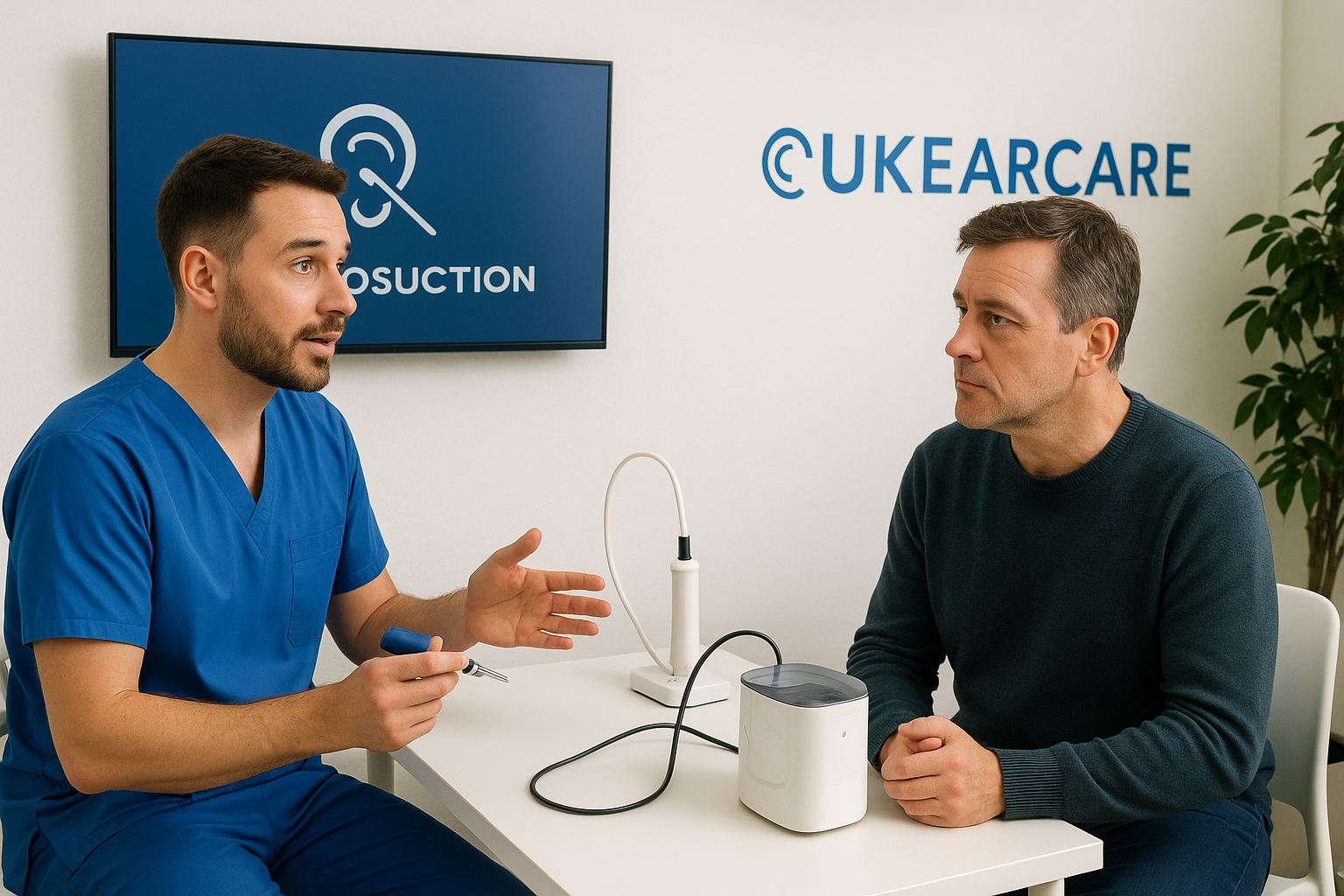
Earwax, or cerumen, is a natural substance your body produces to protect your ears. It traps dust and other small particles, preventing them from reaching your eardrum. Normally, wax works its way out of the ear on its own. Sometimes, however, it can build up and cause problems like muffled hearing, tinnitus (ringing in the ears), dizziness, or discomfort.
When earwax becomes impacted, professional removal is often the safest and most effective solution. Two of the most common methods used by audiologists are microsuction and ear irrigation. But what’s the difference, and which one is the best choice for your situation?
This guide breaks down everything you need to know about microsuction and ear irrigation, helping you make an informed decision about your ear health. We will explore how each method works, who they are suitable for, and what you can expect during and after your appointment.
Understanding the techniques behind microsuction and ear irrigation can help demystify the process and ease any concerns you might have. While both aim to clear the ear canal, they do so in very different ways.
Microsuction is often considered the gold standard for earwax removal by medical professionals. It is a dry technique, meaning no water is used.
Here’s how it works:
Because the procedure is performed under direct observation, it is extremely precise and safe.
Ear irrigation is a modern and more controlled version of what used to be known as ear syringing. Instead of a large, manual syringe, irrigation uses an electronic machine that regulates water pressure and temperature.
Here’s the process:
This method effectively washes out softer wax build-ups.
Your ear health history, the type of wax blockage, and your personal comfort all play a role in determining the most suitable method for you.
Microsuction is the most versatile method and is suitable for nearly everyone, including individuals with:
Ear irrigation can be a good option for people with no complicating ear conditions. It is generally suitable for those who:
A clinician will always examine your ears first to determine if irrigation is a safe and appropriate choice for you.
Both procedures are very safe when performed by a trained and qualified professional. However, there are different risk profiles to consider.
Microsuction is widely regarded as the safest method. The clinician has a constant, magnified view of the ear canal, minimizing the risk of contact with the eardrum or canal walls. The procedure is quick, and since no water is used, the risk of infection is extremely low. Some patients may experience temporary dizziness or a slight reduction in hearing immediately after, but this typically resolves quickly.
Ear Irrigation is also safe, but it carries slightly more risk. Potential complications, though rare, can include:
At a professional clinic, these risks are minimized through proper training, equipment, and a thorough pre-procedure examination.
Knowing the typical flow of an earwax removal appointment can help you feel more prepared and relaxed.
Recovery from both procedures is typically immediate. Most people notice an instant improvement in their hearing and a reduction in symptoms.
With microsuction, you can resume normal activities right away. Your ears might feel a little “airy” or sensitive to sound for a day or so as they readjust.
With ear irrigation, it’s important to keep your ears dry for a few days to prevent infection. Otherwise, you can also return to your daily routine immediately.
In both cases, it’s crucial to avoid putting anything in your ear, such as cotton buds, which can push new wax further down the canal and cause another blockage.

Q: Is earwax removal painful?
A: When performed by a professional, neither method should be painful. Microsuction may feel a bit noisy, like a small vacuum cleaner. Irrigation feels like a gentle whoosh of water. Most people report a feeling of relief.
Q: Do I need to use ear drops before my appointment?
A: For irrigation, using olive oil drops for 3-5 days beforehand is often recommended to soften the wax. For microsuction, it is not always necessary but can make the procedure quicker and more comfortable.
Q: How often should I have my ears professionally cleaned?
A: This varies from person to person. Some people may need a clean every 6-12 months, while others may never need one. Your clinician can advise you based on your level of wax production.
At UK Ear Care, we believe in being clear and transparent about our pricing:
The fee covers your initial consultation and ear health check, the removal procedure for one or both ears, and a follow-up check if required. If no wax is found, a smaller consultation fee will apply.
If you have any questions about our services or fees, please contact us directly and our team will be happy to assist you.
At UK Ear Care, your hearing health is our top priority. Our clinics in Glasgow and Manchester are staffed by fully qualified and experienced audiologists who specialize in safe and effective earwax removal.
We use state-of-the-art equipment for both microsuction and ear irrigation, ensuring you receive the highest standard of care. Our clinicians take the time to conduct a thorough examination and recommend the procedure that is best suited to your individual needs. We pride ourselves on our reassuring, patient-centered approach, making sure you feel comfortable and informed every step of the way.
Don’t let impacted earwax affect your quality of life. Our expert team is here to help you hear clearly and comfortably again.
Disclaimer: The information provided in this blog post is for educational purposes only and does not constitute medical advice. Please consult with a qualified healthcare professional for any health concerns or before making any decisions related to your health or treatment.
